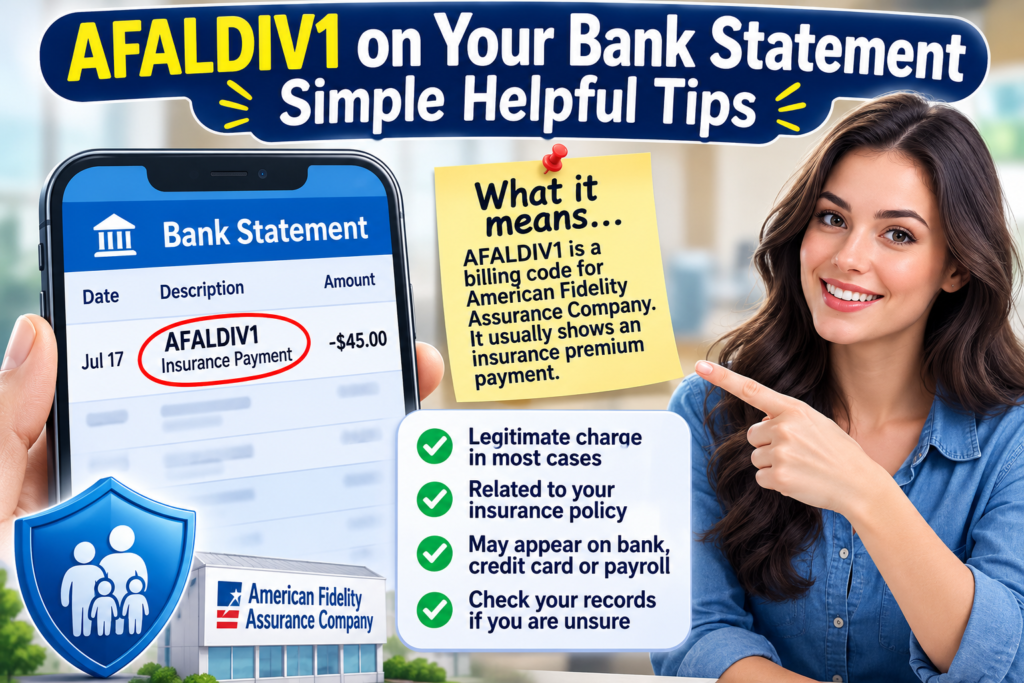

Many people become curious when they notice afaldiv1 on a bank statement, credit card statement, or payroll deduction. At first, the code may look confusing because it does not display a full company name. However, what it means is much simpler than it appears. In most cases, afaldiv1 is a billing description connected to American Fidelity Assurance Company. It usually shows that a payment has been processed for an insurance premium or another authorized service. Learning what this code represents can help you understand your financial records with greater confidence.
Why AFALDIV1 Appears on Your Statement
When afaldiv1 appears on your financial statement, it generally means an insurance-related payment has been processed. Banks and payment processors often shorten merchant names because transaction descriptions have limited space. As a result, the full company name may not appear. What it means is that the payment is linked to your insurance coverage instead of being a random or unknown charge. This helps financial institutions display transactions in a consistent format.
The Company Behind AFALDIV1
The billing code afaldiv1 is commonly associated with American Fidelity Assurance Company. This insurance company provides various coverage options for individuals, families, and employees. These may include supplemental health insurance, disability insurance, life insurance, accident insurance, and other financial protection products. Therefore, if you have one of these policies, seeing afaldiv1 is usually expected during your payment cycle.
What It Means for Policyholders
If you already have an insurance policy with American Fidelity, afaldiv1 usually confirms that your scheduled premium has been collected. What it means is that your policy remains active because your payment has been successfully processed. Regular premium payments help maintain your insurance coverage and reduce the risk of policy cancellation due to missed payments.
Understanding Billing Codes
Billing codes exist because banks cannot always display full business names. Instead, they use shortened descriptions like afaldiv1. Although these abbreviations may seem unfamiliar, they often represent legitimate businesses. Understanding this system helps customers avoid unnecessary concern whenever they review their monthly statements.
Why Insurance Companies Use Short Codes
Insurance providers process millions of transactions every year. Therefore, they rely on standardized billing descriptions to identify payments efficiently. Afaldiv1 is one example of such a code. What it means is that the payment system has assigned a shortened reference that works across different banks and payment processors.
Payroll Deductions and AFALDIV1
Some employees pay insurance premiums through payroll deductions instead of making direct monthly payments. In these situations, afaldiv1 may appear alongside payroll records or bank transactions. This simply reflects that your employer has deducted the insurance premium and sent it to the insurance provider on your behalf.
Credit Card Transactions and AFALDIV1
Many policyholders choose automatic payments using a credit card. When the monthly payment is processed, afaldiv1 may appear on the card statement instead of the company’s complete name. This is a normal practice and usually indicates that your scheduled insurance payment has been completed successfully.
Bank Account Payments
If your insurance premium is withdrawn directly from your checking or savings account, afaldiv1 may appear in your online banking history. What it means is that the authorized automatic payment has been processed according to your selected payment schedule.
Is AFALDIV1 a Legitimate Charge
In most situations, afaldiv1 is considered a legitimate billing description connected with an insurance payment. However, you should always compare the charge with your insurance records and payment schedule. If the amount matches your expected premium, there is usually nothing to worry about.
What to Do If You Do Not Recognize AFALDIV1
Sometimes people notice afaldiv1 even though they do not immediately remember purchasing insurance. In this case, check your insurance documents, employer benefit records, and previous statements. What it means is that the payment may relate to an older policy, family coverage, or an employer-sponsored benefit that you forgot about.
How to Verify the Charge
The safest way to verify afaldiv1 is by reviewing your insurance paperwork and payment history. Compare the transaction amount with your regular premium. If everything matches, the charge is likely correct. If questions remain, contacting your bank or the insurance company can provide additional clarification.
Could AFALDIV1 Be Fraud
Although afaldiv1 is generally a legitimate billing code, every unexpected financial transaction deserves attention. If you have never owned an insurance policy connected with this company and cannot identify the payment, report it promptly. Early investigation helps protect your financial accounts from unauthorized activity.
Benefits of Automatic Insurance Payments
Many customers appreciate automatic payments because they reduce the chance of missing a premium. When afaldiv1 appears each month, it often reflects that your payment schedule is working correctly. This can help keep your insurance active without requiring manual payments every billing cycle.
Common Insurance Products Related to AFALDIV1
The billing code afaldiv1 may be connected with several insurance products, including supplemental health insurance, accident insurance, disability insurance, life insurance, and cancer insurance. What it means is that the exact policy depends on the coverage you selected when enrolling with the insurance provider.
Why Transaction Descriptions Look Different
Every bank formats transaction descriptions differently. Therefore, one customer may see afaldiv1, while another sees a longer or slightly different version of the company name. This variation depends on the payment processor and the financial institution handling the transaction.
Keeping Track of Insurance Payments
Monitoring recurring charges such as afaldiv1 is a smart financial habit. Review your monthly statements, compare payment amounts, and keep copies of insurance documents. Doing so makes it easier to identify expected payments and quickly spot anything unusual.
How AFALDIV1 Helps With Financial Records
Although the code may appear confusing, afaldiv1 serves an important purpose by helping payment systems identify insurance transactions accurately. Once you understand what it means, reviewing your financial statements becomes much easier because you can quickly recognize recurring insurance payments.
Tips for Managing Insurance Billing
Good recordkeeping can prevent confusion when you see afaldiv1 on your statement. Save policy documents, note your premium due dates, and review your statements regularly. These simple habits make it easier to understand where your money goes and ensure your coverage stays current.
When You Should Contact Customer Support
If the amount charged under afaldiv1 differs from your expected premium, appears more than once unexpectedly, or cannot be matched with any policy, contacting customer support is the best next step. They can explain the transaction details and help resolve any billing concerns.
Final Thoughts on AFALDIV1
Understanding afaldiv1 removes much of the confusion that can come from reading bank statements. In most situations, what it means is that an insurance premium or authorized payment associated with American Fidelity Assurance Company has been processed. By reviewing your insurance records, monitoring recurring payments, and verifying unfamiliar charges promptly, you can confidently manage your finances and avoid unnecessary worry whenever this billing code appears.
FAQs
What is afaldiv1?
It is a billing code commonly associated with American Fidelity Assurance Company.
Why does afaldiv1 appear on my bank statement?
It usually represents an insurance premium payment or another authorized transaction.
Is afaldiv1 a legitimate charge?
Yes, in most cases it is a legitimate insurance-related payment.
Should I worry if I see afaldiv1?
No, unless you do not recognize the payment or never authorized it.
What should I do if I do not recognize afaldiv1?
Review your insurance records and contact your bank or the insurance provider for verification.