

Moving heavy equipment like machines, presses, transformers, or large molds can be tough. Air casters make it easier by floating the load on a thin film of air. This cuts friction so much that one or two people can push huge weights with little effort. But picking the right air casters matters a lot. The wrong choice leads to poor performance, damage, or safety issues. This guide walks you through the main steps to choose the best air casters for your heavy moving jobs. We cover load weight, floor type, air needs, and more in simple terms.
What Are Air Casters and How Do They Work?
Air casters are round pads or modules that connect under your load or a platform. They blow compressed air out through small holes to create an air cushion between the pad and the floor. This lifts the load just a tiny bit—about the thickness of a sheet of paper—and lets it float almost without friction.
You can move the load in any direction by hand or with a small tug. No wheels touch the ground, so there’s no rolling resistance. Air casters work great for precise positioning in factories, shipyards, or assembly areas. They handle loads from a few tons up to hundreds of tons when you use multiple units.
Start with Your Load Weight and Size
The first thing to check is how much your equipment weighs. Write down the total weight, including any fixtures or tools attached. Add a safety buffer—pick air casters rated 20-50% higher than your load to stay safe.
Air casters come in different sizes with set load ratings per unit. Smaller ones handle a few tons each, while larger heavy-duty ones support 20 tons or more per caster. Most systems use 4, 6, or more casters to spread the weight evenly.
Look at the load’s footprint too—how big the base is. The casters need to fit under it without tipping. Know the center of gravity so weight stays balanced. Uneven loads can make one side lift too much and lose the air film.
Floor Conditions Matter a Lot
Air casters need a smooth, non-porous floor to work right. The surface must be sealed so air doesn’t leak away. Standard machine-troweled concrete works best. Avoid rough broom-finished concrete, porous materials, or big cracks.
Small gaps or joints under 1-2 mm are okay in many cases, but bigger ones cause air loss and uneven floating. Check for oil, water, or debris—these break the air seal. Clean floors help a lot.
If your floor isn’t perfect, some fixes help. Seal cracks, grind high spots, or add epoxy coatings. Outdoor use is hard because dirt and uneven ground stop the system from working well. Air casters shine indoors on good concrete.
Air Supply Requirements
You need a steady supply of clean, dry compressed air. Most systems run at 25-50 psi, depending on if they’re standard or heavy-duty.
Air flow matters too—measured in cubic feet per minute (CFM). A 10-ton load might need 40-60 CFM at 60-80 psi on a smooth floor. Heavier loads or more casters use more air.
Check your shop’s compressor. It should handle the flow without dropping pressure. Long hoses reduce flow, so keep them short and thick. Many kits include regulators and filters to keep air clean.
For frequent use, plan for a dedicated compressor or quick-connect points. Running out of air mid-move stops everything.
Types of Air Casters and Systems
Air casters come in a few main types. Standard round modules are common for general use. They attach to a load frame or pallet.
Heavy-duty versions use higher pressure for bigger loads and tougher conditions. Some have built-in skirts to hold air better on slightly imperfect floors.
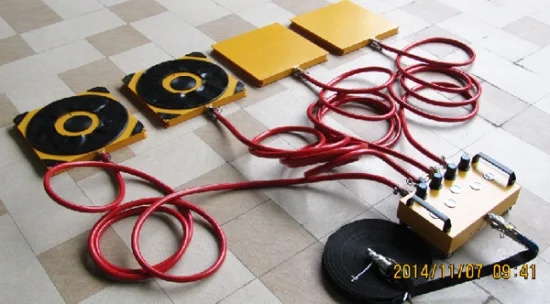
Systems include individual casters you place under the load, or pre-built transporters with handles and controls. For very heavy stuff, look at integrated air film movers that combine multiple casters on a platform.
Pick based on how often you move and what precision you need. Simple manual setups work for occasional jobs. Automated ones with controls suit daily heavy work.
Safety and Ease of Use
Air casters make moving safer because force is low—often just 1% of the load weight. A 50-ton load might need only 1,000 pounds of push. This cuts back strain and injury risk.
Add features like load levelers or positioning aids for better control. Always train operators on setup, air checks, and emergency stops.
Spread weight evenly and secure tall loads to prevent tipping. Check air lines for leaks before starting.
Cost Factors and What to Expect
Air caster systems cost more upfront than rollers or skates. A basic setup for 10-20 tons might run thousands of dollars. Larger systems for 50+ tons go higher, plus compressor costs if you don’t have one.
Ongoing costs include air energy and maintenance, like pad replacement. But they save on labor—no big teams needed—and protect floors from damage.
For a clear breakdown on costs, check out this air caster price guide.
Where to Buy and Final Tips
Shop from suppliers who give full specs on capacity, air use, and floor needs. Read reviews from real users in similar industries.
Good places offer support for setup and troubleshooting. Test if possible, or start with a rental to try before buying.
To see more options and heavy moving tools, visit https://cargotrolley.com/.
Before you buy, list your load weight, floor type, air supply, and how often you’ll use them. Measure everything twice. Choose casters with extra capacity for safety. With the right ones, moving heavy equipment becomes smooth, safe, and much faster. You’ll save time and effort right away.