
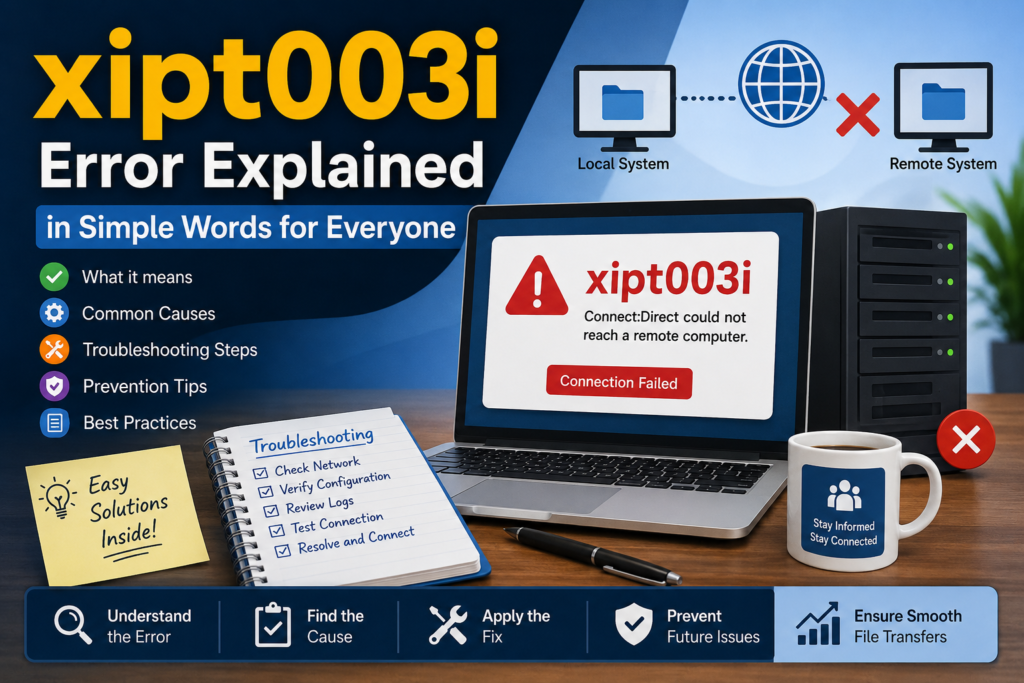

The xipt003i error is a message that appears in IBM Connect Direct when the software cannot connect to a remote computer or remote node. What it means is that one system is trying to communicate with another system, but the connection cannot be completed. Think of it like making a phone call to someone whose phone is turned off or disconnected. The call starts, but nobody answers because the connection cannot be made. This message does not always mean that something is seriously broken. Instead, it tells you that the communication attempt failed and that you should investigate the reason behind it. Understanding this message is the first step toward solving the problem quickly.
Why xipt003i Appears
The xipt003i message appears whenever Connect Direct cannot establish a successful session with the remote system. What it means is that the software tried its best to connect, but the destination was unavailable for one reason or another. This can happen because of network problems, incorrect configuration settings, firewall restrictions, unavailable services, or even temporary maintenance on the remote server. Since many different issues can trigger the message, administrators usually perform several checks before identifying the real cause.
How IBM Connect Direct Works
IBM Connect Direct is designed to transfer files securely and reliably between computers. It is commonly used by businesses that exchange important information every day. What it means is that instead of sending files manually, Connect Direct automates secure file transfers between systems. Whenever two systems communicate successfully, data moves smoothly from one location to another. However, if communication fails, errors such as xipt003i appear to inform administrators that the connection could not be completed.
The Meaning Behind the Error
The most important thing to understand about xipt003i is that it represents a failed connection attempt rather than a file transfer problem itself. What it means is that the transfer never really started because the two systems could not establish communication. Before files can move, both computers must recognize each other, exchange information, and create a secure session. If this first step fails, the transfer stops immediately and the error message is displayed.
Common Reasons for xipt003i
Several situations may cause the xipt003i error. The remote server may be offline, network equipment may block traffic, incorrect IP addresses may be configured, firewall rules may prevent communication, or the Connect Direct service on the destination system may not be running. Temporary internet or internal network interruptions can also trigger this message. Understanding these common causes helps reduce troubleshooting time because administrators know where to begin their investigation.
Network Connectivity Problems
Network connectivity issues are one of the most common reasons behind xipt003i. What it means is that the computers simply cannot reach each other across the network. A damaged cable, router failure, switch problem, VPN interruption, or internet outage can all prevent communication. Even a short network interruption may cause the connection request to fail. Therefore, checking network connectivity is usually one of the first troubleshooting steps.
Incorrect IP Address or Hostname
Every remote node must have the correct address stored in its configuration. If the IP address or hostname is wrong, xipt003i may appear because Connect Direct attempts to contact the wrong destination. What it means is that the software is sending requests somewhere that does not respond correctly. Carefully reviewing the configuration can often solve this issue quickly.
Firewall Restrictions
Firewalls protect networks by controlling incoming and outgoing connections. While they improve security, they may accidentally block legitimate Connect Direct communication. When this happens, xipt003i can appear because the connection request never reaches the remote server. Network administrators should verify that the required ports remain open for authorized communication while maintaining proper security controls.
Remote Server Not Available
Sometimes the remote server is simply unavailable. It may be powered off, restarting after maintenance, experiencing hardware failure, or temporarily disconnected from the network. What it means is that Connect Direct cannot find the destination because it is not ready to accept connections. Waiting until the server becomes available again often resolves the issue without making any configuration changes.
Configuration Mistakes
Configuration errors can easily trigger xipt003i. Even a small mistake in node definitions, communication parameters, security settings, or network mappings may prevent successful communication. What it means is that both systems are trying to communicate using different information. Careful review of configuration files often reveals the source of the problem.
DNS Resolution Issues
Many organizations use hostnames instead of IP addresses. If the Domain Name System cannot translate the hostname correctly, xipt003i may occur. What it means is that Connect Direct knows the server name but cannot discover its network address. Verifying DNS records and testing name resolution helps eliminate this possibility.
Security Settings and Authentication
Modern systems require strong authentication before accepting incoming connections. If usernames, passwords, certificates, or security policies do not match, the connection may fail. What it means is that although both systems can see each other, they cannot establish a trusted communication session. Reviewing authentication settings is an important part of troubleshooting.
Checking Connect Direct Logs
Log files provide valuable information whenever xipt003i occurs. They often include timestamps, communication details, network responses, and additional error messages that point toward the actual problem. What it means is that the logs help administrators move beyond guessing and begin troubleshooting using real technical evidence. Reading the logs carefully can save significant time.
Testing the Remote Connection
Before changing system settings, administrators often test the remote connection using network tools. Successful tests confirm that the network path is working correctly, while failed tests indicate communication problems. What it means is that these tests help separate network issues from application issues. This makes troubleshooting much faster and more organized.
Steps to Troubleshoot xipt003i
A structured troubleshooting approach usually produces the best results. Begin by confirming that both servers are online. Next, verify network connectivity, review firewall rules, check configuration files, examine DNS resolution, inspect Connect Direct logs, and confirm authentication settings. What it means is that solving xipt003i becomes much easier when each possible cause is checked one by one instead of making random changes.
Preventing Future xipt003i Errors
Preventing xipt003i requires good system maintenance and regular monitoring. Keeping servers updated, reviewing firewall rules, monitoring network health, validating configurations, and testing connections periodically can greatly reduce unexpected communication failures. Preventive maintenance allows organizations to identify small problems before they become major service interruptions.
Best Practices for System Administrators
Experienced administrators follow consistent procedures to minimize communication errors. They document configuration changes, maintain backup configurations, monitor server health, schedule regular testing, and review logs frequently. These habits make troubleshooting much easier whenever xipt003i appears because administrators already have accurate records and reliable monitoring information.
Real World Example of xipt003i
Imagine a company that transfers payroll files every evening. One night the transfer suddenly fails with the xipt003i message. After investigation, the administrator discovers that the remote server was restarted during scheduled maintenance and the Connect Direct service had not yet started. Once the service was restarted, the connection worked normally again. This example shows that the error often points to a communication problem rather than damaged files.
Mistakes to Avoid During Troubleshooting
Many administrators make troubleshooting more difficult by changing multiple settings at once. This creates confusion because it becomes impossible to identify which change solved the issue. Another common mistake is ignoring log files or assuming the network is working without testing it. A careful, step-by-step process usually produces better and faster results than making random configuration changes.
Why Understanding xipt003i Is Important
Understanding xipt003i helps administrators respond calmly instead of assuming the entire system has failed. What it means is that the software is providing a useful warning about a communication problem that needs investigation. By understanding the message, identifying the possible causes, and following a logical troubleshooting process, organizations can restore reliable file transfers with minimal downtime and improve the overall stability of their Connect Direct environment.
Conclusion
The xipt003i error is one of the most common communication messages seen in IBM Connect Direct environments. Although it may look confusing at first, it simply indicates that the software could not establish a connection with the remote computer. What it means is that communication failed before the file transfer could begin. Fortunately, most cases are caused by common issues such as network interruptions, firewall restrictions, incorrect configuration settings, unavailable servers, or authentication problems. By understanding how Connect Direct works, checking each possible cause carefully, reviewing log files, and following a systematic troubleshooting process, administrators can resolve xipt003i efficiently and reduce the chances of future connection failures.
FAQs
What is xipt003i?
xipt003i is a Connect Direct error that indicates the software could not connect to the remote system.
Is xipt003i a file corruption error?
No. It is a communication error that occurs before file transfer begins.
Can firewall settings cause xipt003i?
Yes. A firewall blocking the required network ports is a common cause.
How do I fix xipt003i?
Check network connectivity, verify server availability, review configuration settings, inspect firewall rules, and examine Connect Direct logs.
Can xipt003i be prevented?
Yes. Regular monitoring, correct configuration, routine maintenance, and network health checks can significantly reduce the chances of encountering xipt003i.
Read also: B01KWY73KI the Compact Dual USB Wall Charger